
Agenda
October 20-21, 2026 | The Altman Building | New York, NY
A Program Designed for Decisive Leaders
This conference brings the most influential minds in financial services together for two days of strategy, insight, and forward-thinking discussion. Through high-impact sessions, peer-led roundtables, and focused conversations, you’ll uncover transformative ideas and gain perspectives to navigate shifting market dynamics.
Every exchange is purposeful, every connection strategic.
Filtering by
Tuesday, October 20, 2026
8:30 am
Registration and Networking Breakfast
45 min
9:15 am


9:25 am
Keynote The Future of the Financial System: Building Trust for an Always-On World
25 min


Banking is entering a new era, shaped by AI, digital assets, real-time payments, and rising expectations for seamless access to financial services. As the industry modernizes, the challenge is not simply adopting new technologies, but doing so in ways that strengthen trust, resilience, and security. Nasdaq’s Adena Friedman, Chair and CEO, will discuss the forces transforming finance and why trust remains the essential foundation for innovation in an increasingly connected and always-on world.
9:50 am
Competing in Real Time: AI, Tokenization, and the New Rules of Financial Power
40 min

Natasha Barrientos
Head of Digital Assets for Global Payments & Liquidity
Wells Fargo

Lisa Farkovits
Managing Director, Model and AI Risk Management, Risk Business Manager
Barclays

Sandy Kaul
Executive Vice President, Head of Digital Assets & Innovation
Franklin Templeton
Banking is operating within a period of massive disruption. AI is shifting from a support function to a decisioning layer, real-time payments are resetting the definition of liquidity and speed, and tokenization is beginning to reshape how value is issued, moved, and held on balance sheets. Yet too many institutions continue to treat these forces as future-state initiatives rather than present-tense competitive realities.
10:30 am
Networking Break
40 min
11:10 am
Fireside Chat Leading Through Inflection: Turning Change into Opportunity
30 min

Stacey Mullin, BlackRock’s Deputy Chief Operating Officer, has spent nearly two decades helping the firm navigate some of the most consequential shifts in modern business – from the Global Financial Crisis and Brexit to Covid and today’s rapid advances in AI. In this fireside chat, Stacey will explore how leaders can turn moments of inflection into opportunities for creativity, growth and innovation. She’ll discuss what it takes to deploy AI at scale in ways that deliver for clients and create great careers for people, while sharing lessons from her own journey growing alongside BlackRock and leading through transformation.
11:40 am
From Operator to Strategist: Women Who Are Shaping the Future of Digital and On-Chain Finance
40 min

Michelle Calarco Moore
EVP, Head of Digital, Data & AI
Wells Fargo

Nadine Teychenne
Global Head of Digital Assets, Investor and Issuer Services
Citi

Vivian Yeung
EVP, Chief Digital & Technology Officer
Fremont Bank

As banking and financial services evolve toward AI-driven operations, tokenized assets, programmable money, and digitally native financial infrastructure, women leaders must move beyond execution and develop the strategic influence needed to shape institutional direction and industry transformation.
12:20 pm
American Banker’s The Most Powerful Women in Banking Luncheon
1 hr 15 min
Roundtable Crisis and Continuity: Managing the Fallout of a Cyber Incident
1 hr 15 min

When screens go dark, a cyber breach becomes a high-stakes business survival test. Navigating an incident beyond the firewall requires a tactical playbook to manage resulting operational fallout. This session focuses on handling critical communications, rapid regulatory reporting, and protecting customer trust. We will explore how to effectively partner with technical security teams and confidently make high-stakes operational decisions with incomplete information.
Roundtable Multi-Generational Management: Mentoring, Reskilling, and Retaining Your Team
1 hr 15 min
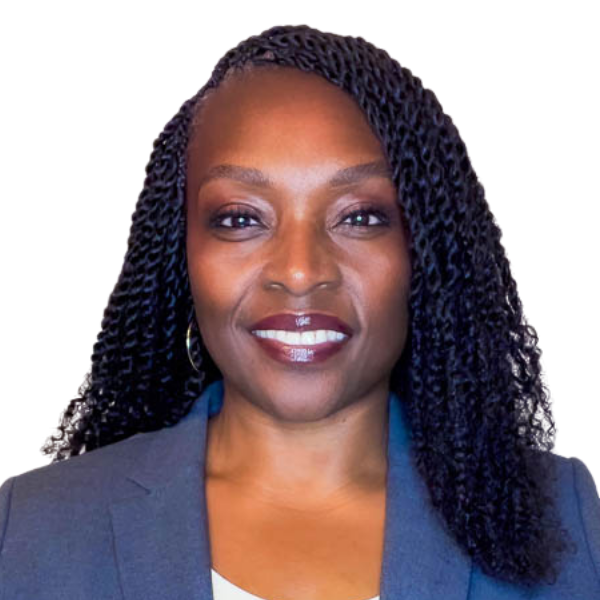
Managing a multi-generational workforce is no longer just an HR issue, it’s a commercial imperative. Yet too many leaders see age gaps as a challenge rather than a strength. To lead effectively through rapid industry shifts, executives must learn to tailor development across vastly different career stages. This session explores actionable strategies to help veterans adapt to new workflows while retaining emerging talent who demand different management styles.
Roundtable Strategic Upside: Maximizing ROI in Bank-Fintech Partnerships
1 hr 15 min


Choosing the right fintech partner is only the first step—the real competitive advantage lies in execution and commercialization. Too many institutions treat fintech integration as a simple IT upgrade rather than a core growth engine. This session shifts the conversation from defensive risk management to offensive value creation. The discussion will explore how forward-thinking banks are strategically capitalizing on their fintech partnerships to unlock new revenue streams, aggressively lower customer acquisition costs, and rapidly capture market share.
Roundtable The Art of the Pushback: A Guide to Framing Dissent
1 hr 15 min
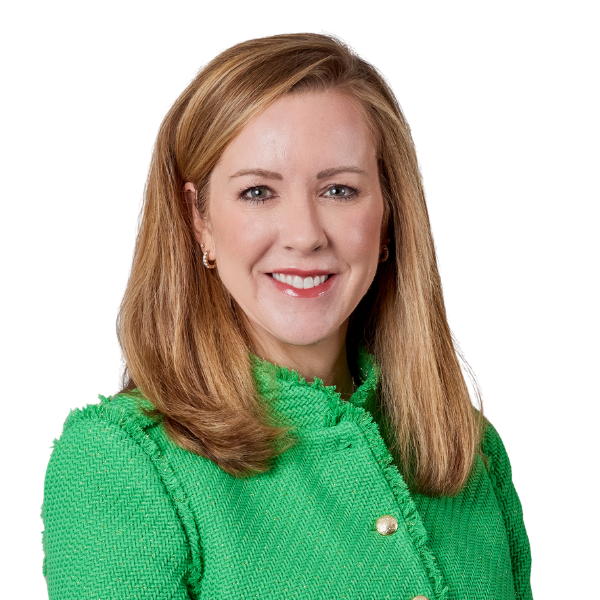
Innovation comes from well-executed, strategic dissent. Too many executives shy from voicing concerns because they lack frameworks to challenge assumptions without burning political capital. This roundtable focuses on the art of presenting a contrarian perspective in high-stakes environments. We will explore how to argue effectively without sacrificing professional equity or being mischaracterized, and how to deploy strategic pushback that drives better business outcomes.
1:35 pm
Fireside Chat with Allison Dukes: Balancing Act
30 min


In her nearly 30-year career in financial services, Allison Dukes has risen from an associate at a bank to the chief financial officer at $2.45 trillion AUM Invesco. While she jokingly says she “took the scenic route to leadership,” her carefully considered choices allowed her to grow professionally while nurturing her personal life. In a candid conversation, Dukes will discuss how to maximize your potential, how less obvious career choices can be key to success, and how to be true to your values in all facets of your life.
2:05 pm
From Concept to Corner Office: How to Move from Ideation to Sponsorship to Promotion
35 min

Yie-Hsin Hung
President and CEO
State Street Investment Management
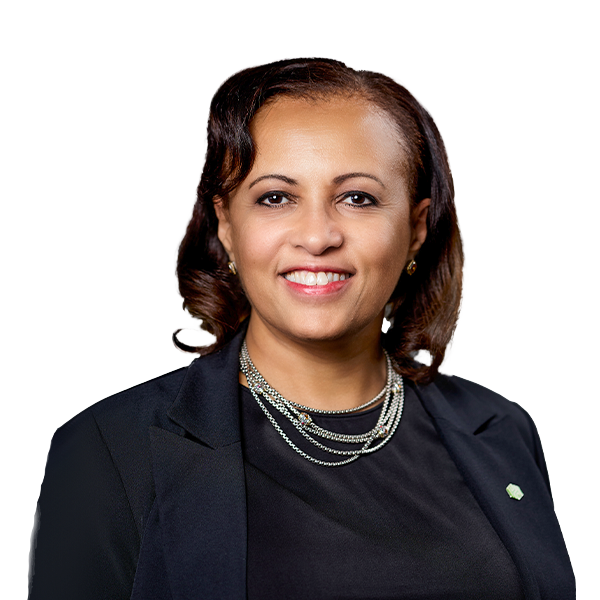
Zewditu Menelik
Executive Managing Director, Corporate, Specialty and Government Banking
Huntington National Bank
For rising executives, moving into leadership roles with increasing responsibility and influence requires more than executing day-to-day duties. It demands the ability to envision and drive visible, meaningful ideas that lead to business outcomes and/or institutional change. This session outlines the strategic roadmap for turning a strategic business, market or innovation idea into a career-defining promotion. Our panel of prominent executives will deconstruct the mechanics of stress-testing an original idea, how to successfully execute it while also capturing the attention of an executive sponsor who can advocate for your ascension, and steps to leverage your success into a promotion. Our panelists will discuss:
2:40 pm
Networking Break
40 min
3:20 pm
Cybersecurity and Fraud in the AI Era: A Leadership Imperative in Real-Time Risk
35 min
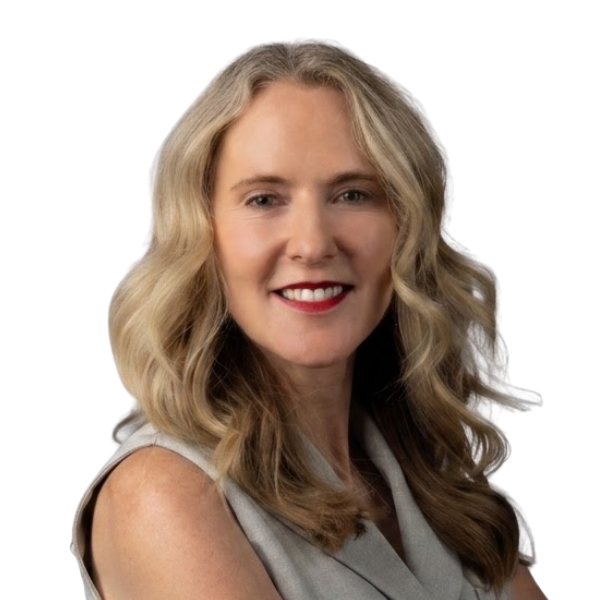
Ann Barron-DiCamillo
EVP and Chief Information Security Officer
U.S. Bank

Stephanie Richard
Chief Risk Officer
Ally Financial
As artificial intelligence reshapes how financial services operate, it is also fundamentally redefining the nature of fraud and cybersecurity risk. What was once managed as a perimeter defense or a back-office risk function has become a continuous, enterprise-wide leadership challenge—where threats evolve in real time, at machine speed, across every customer interaction and internal workflow.
3:55 pm
Keynote Be Your Own CEO: Courage, Career Risk, and Leading Beyond Your Comfort Zone
25 min

Over the course of a career spanning multiple global leadership positions, Lisa McGeough has learned that the most defining moments rarely come from the safest choices. In this candid keynote, she shares the pivotal decisions that shaped her path, from pursuing international opportunities and taking on challenging leadership assignments to navigating career progression while balancing competing personal and professional priorities.
4:20 pm
Reception
1 hr
Wednesday, October 21, 2026
7:30 am
Registration and Networking Breakfast
1 hr
8:30 am
8:35 am
Fireside Chat The Economic Crosscurrents: What Will Shape Markets and Banking in 2027?
30 min
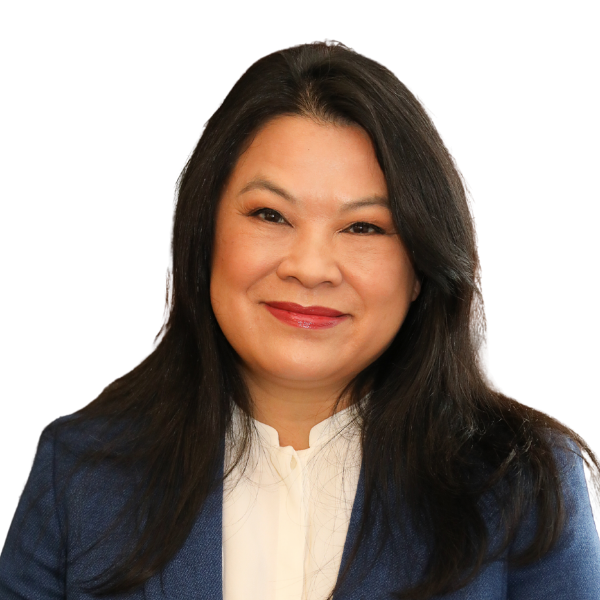
As 2026 draws to a close, the global economy faces a complex convergence of forces—from shifting monetary policy, persistent inflation risks and geopolitical instability to mounting fiscal pressures, trade realignments and the accelerating impact of AI. What will determine the direction of economic growth, capital flows and financial markets in 2027 and where are the greatest risks and opportunities emerging? In this wide-ranging conversation, Joyce Chang, Managing Director and Chair of Global Research at J.P. Morgan, will examine the economic, political and structural forces reshaping the global outlook, the potential for market volatility and financial instability, and the implications for interest rates, credit conditions, liquidity and investment. The discussion will explore what these crosscurrents mean for bank profitability, lending, capital allocation and growth, and how financial institutions should position themselves for a year in which economic resilience, market dynamics and competitive advantage may be tested in new ways.
9:05 am
Fireside Chat The Rise of the AI Workforce: Turning Compliance Into Competitive Advantage
25 min

What happens when AI moves beyond helping compliance teams manage work to actually performing it? For banks and the businesses they serve, this shift could fundamentally change the economics of compliance, risk management and growth. As regulatory complexity intensifies, AI agents are emerging that can interpret obligations, execute workflows, investigate suspicious activity and document decisions—all within defined controls and with human oversight. In this conversation, Leela Founder and CEO Preeti Krishnan explores how autonomous AI is transforming compliance from a labor-intensive cost center into an intelligent, scalable capability. The discussion will examine what this means for banks, their fintech partners and business customers, how institutions can balance automation with accountability, and whether the next generation of AI-powered compliance infrastructure could become a competitive differentiator rather than a constraint on innovation and growth.
9:30 am
The Business of Executive Presence: Driving Influence, Impact and Decision Clarity in Banking Transformation
40 min
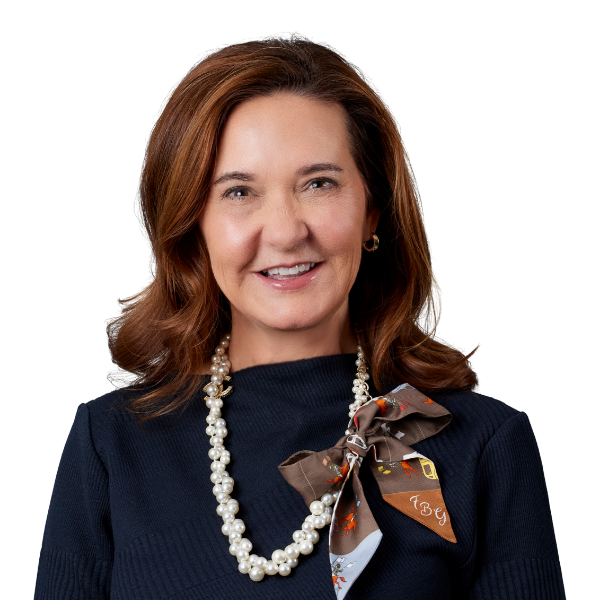
Shellie Creson
Chief Risk Officer
Pinnacle Financial Partners

Danielle Johnson
Global Head of Institutional Clients
HSBC

Beth Mikes
EVP, Head of Debt Capital Markets
KeyBanc Capital Markets
In today’s banking environment—defined by rapid regulatory change, AI-enabled operating models, and accelerating digital and on-chain finance—executive presence has become a performance differentiator. It is no longer about visibility, but about the ability to shape decisions, translate complexity into enterprise impact, and create confidence in high-stakes moments.
10:10 am
Networking Break
40 min
10:50 am
Fireside Chat An Interview with Markie Wagner, Founder and CEO, Poetic
30 min

The last thing a regulator wants to see in a fraud decision is an AI agent improvising. Markie Wagner, founder and CEO of Poetic, is betting that the future of banking involves using AI technology that mirrors an employee with a firm understanding of its rulebook. After working on AI at Google and Waymo, earning a Thiel Fellowship, and walking away from Stanford, Wagner built Poetic around a contrarian idea: let AI write the code once, then let the code do the work, predictably, auditably, and without the runaway costs of a model reasoning from scratch on every case. With funding from Kleiner Perkins and Founders Fund, Poetic’s technology is already running fraud, KYC, and dispute operations at SoFi, Chime, and AIG, Join us for an unfiltered conversation about why so many AI pilots stall before production, where humans must stay in control, and what happens to the banks that wait too long to rebuild their operations as software.
11:20 am
American Banker’s The Most Powerful Women in Banking Luncheon
1 hr 15 min
Roundtable Built for Change: Technology Infrastructure at Customer Speed
1 hr 15 min

Banks are under pressure to modernize technology faster than customer expectations evolve. This leadership roundtable explores how senior leaders can build the infrastructure needed to support continuous innovation—from legacy modernization and cloud transformation to enterprise AI and emerging on-chain capabilities. Participants will discuss how to balance resilience with speed, align technology investments with business outcomes, and create an architecture that enables the bank to adapt, scale, and compete in a digital-first future.
Roundtable Redefining Customer Experience Across The Enterprise
1 hr 15 min


True digital transformation can’t happen in a vacuum. Elevating customer experience through AI requires more than just launching smart applications. To improve customer experience with AI without creating new organizational silos, banks have to shift away from buying fragmented “point solutions”—like an isolated chatbot for your mobile app or a separate AI tool just for marketing emails–to building a horizontal architecture.
Roundtable The Power of Internal Alliances: Leading Digital Product Innovation
1 hr 15 min

The best digital products are rarely built by one business unit alone. They emerge when leaders across product, technology, operations, risk, data, compliance, and the business unite around a shared customer need or market opportunity. This roundtable explores how women leaders can build internal alliances, break down silos, secure executive sponsorship, and lead cross-functional innovation that accelerates product development, drives measurable business results, and strengthens competitive advantage.
Roundtable Why Risk is Everyone’s Business
1 hr 15 min

In banking, risk is not a department—it is the baseline architecture of every transaction, product, and customer interaction. Historically, financial institutions managed risk in siloes: credit risk lived in lending, compliance lived in legal, and cyber threat vectors lived in IT. Today, those boundaries have entirely dissolved.
12:35 pm
AI as a Leadership Moment: Who Owns Decisions in the Age of Agentic Systems?
35 min

Kristin Lesher
Chief Wholesale Banking Officer
Truist

Rhea Rajwani
Head of AI & Emerging Banking Solutions Risk
M&T Bank
AI is no longer just augmenting workflows—it is beginning to make decisions, take actions and coordinate work across the enterprise. As agentic AI systems evolve from copilots to operators, bank executives face a defining leadership question: Who governs decision-making when machines act autonomously?
1:10 pm
Regulation as Competitive Architecture: Who Shapes the Rules Shapes the Market
45 min

Nicole Anderson
Principal, FS Regulatory Advisory Services
PwC

Jodi Richard
Vice Chair, Chief Risk Officer
U.S. Bank

Jennifer Taylor
Chief Compliance Officer, Banking & International
Citi
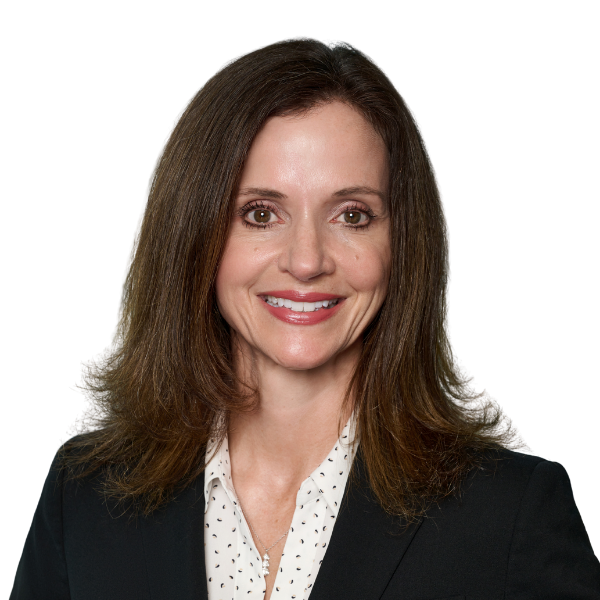
Kara West
Chief Enterprise Risk Officer
Capital One

Regulation is becoming a live mechanism for defining market structure, competitive advantage and product feasibility. In the post-GENIUS Act environment and evolution of digital-asset frameworks, regulatory interpretation increasingly shapes how capital moves, how products are designed, and how financial institutions position themselves in emerging digital markets.
1:55 pm
Fireside Chat An Interview with Lynn Martin, President, NYSE Group
25 min

Markets that never close are closer than you think. The rules of public markets are being transformed to match the impact of innovation, and few people have a better view of this than Lynn Martin. As president of NYSE Group, she oversees the institution that is the central pillar of global capitalism as it pushes into tokenization, extended-hours trading, and AI—including its work with Project Glasswing—while keeping its trading platform steady through bouts of extreme volatility. In this candid one-on-one interview, Martin will discuss what responsible innovation looks like when trillions of dollars are on the line, what she told the House Financial Services Committee about reviving economic growth and capital formation, and where she stands on the SEC’s move to make quarterly earnings reports optional. She’ll also give her read on the IPO market and what it will take to bring more companies back to the public markets.
2:20 pm
Networking Break
30 min
2:50 pm
Mastering the Final Stretch to the C-Suite
40 min

Amy Brady
Managing Partner
MAI Capital Management

Diane Morais
Former President, Consumer and Commercial Banking
Ally
Women have made meaningful gains in banking leadership, but the path to the CEO office remains remarkably narrow. Despite years of progress, just two of the top 50 U.S. banks are led by female CEOs, exposing a persistent gap between executive representation and ultimate leadership. Why does advancement stall at the final stretch? This candid discussion examines the structural barriers that continue to shape succession—from unequal access to P&L roles and executive sponsorship to enterprise visibility and outdated expectations of leadership. C-suite executives will share practical strategies for building cross-functional influence, positioning for CEO succession, and shifting from functional operator to enterprise leader in an industry where the pipeline remains fragile and the stakes have never been higher.
3:25 pm